Emotional intelligence (EI) is the key to turning strategic goals into shared missions. Leaders who combine emotional awareness with clear objectives inspire commitment, improve team performance, and drive growth. Research shows that EI influences 58% of job performance and is twice as important as IQ or technical skills for leadership success. CEOs with strong EI see 8.7% annual revenue growth, compared to 3.2% for those with lower EI.
To align EI with your goals:
- Understand EI’s Core: Focus on self-awareness, self-management, social awareness, and relationship management.
- Assess Yourself: Use tools like journaling, 360-degree feedback, and emotion labeling to identify personal triggers and blind spots.
- Set Emotionally Connected Goals: Frame objectives to resonate with team values and motivations.
- Build Trust: Communicate with honesty, listen actively, and create psychological safety.
- Monitor Emotions During Execution: Track team dynamics, address concerns early, and maintain motivation.
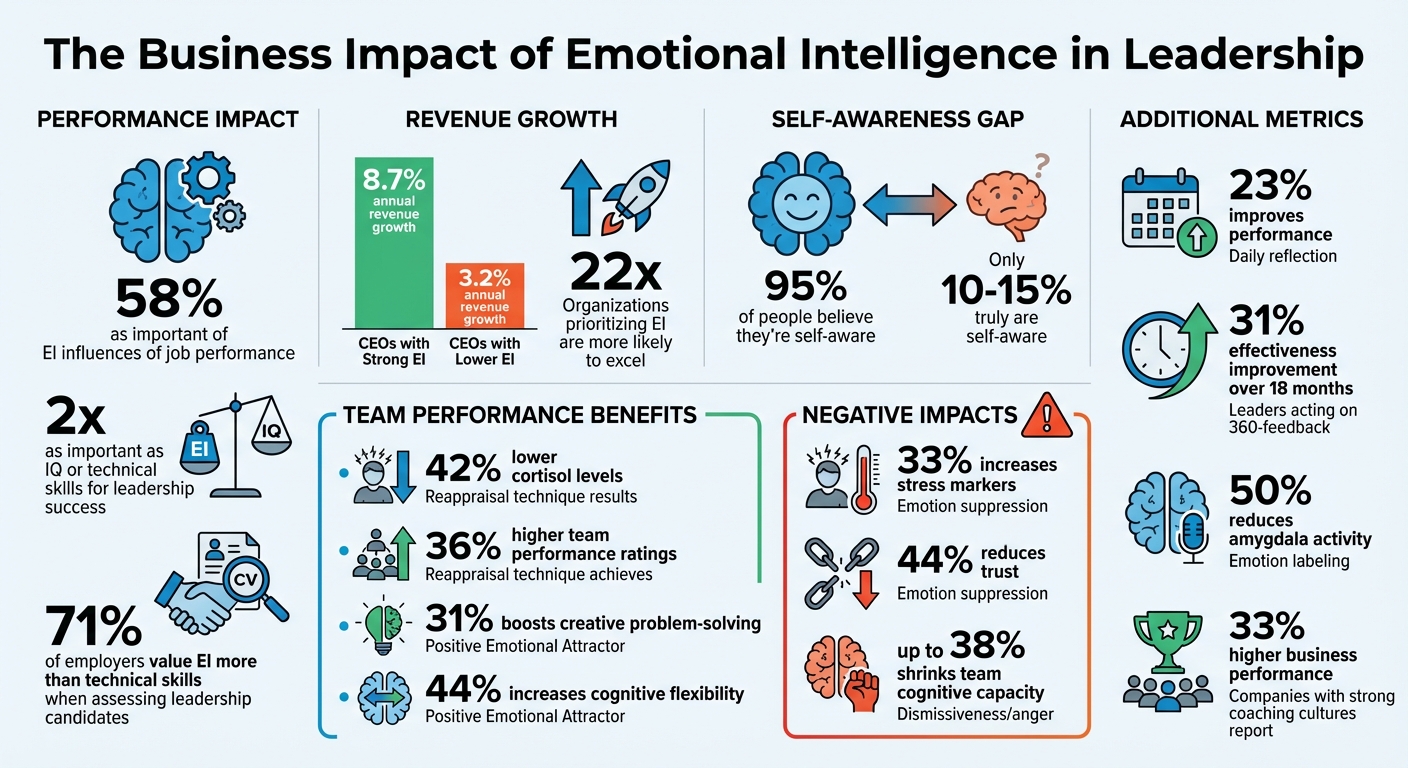
Emotional Intelligence Impact on Leadership Performance and Business Results
Developing Emotional Intelligence As A Leader
sbb-itb-5c9cdaf
What Emotional Intelligence Means for Leaders
Emotional intelligence is all about understanding and managing emotions – both your own and those of others – to make better decisions and lead more effectively. It’s the ability to use emotional awareness to build strong relationships, guide teams through challenges, and make thoughtful choices.
Here’s a striking fact: 71% of employers value emotional intelligence more than technical skills when assessing leadership candidates. Yet, many leaders overestimate their abilities in this area. While 95% of people believe they’re self-aware, research shows that only 10–15% truly are [5]. This disconnect between perception and reality highlights why so many leadership strategies fall flat – leaders often miss the emotional dynamics that can either propel or derail their efforts.
The Core Components of Emotional Intelligence
Emotional intelligence is built on four key abilities that shape how you lead:
- Self-awareness: This is about recognizing your own emotional triggers, strengths, and blind spots. For example, understanding when frustration clouds your decisions or when anxiety tempts you to micromanage [4].
- Self-management: The skill of regulating your emotions under pressure and responding thoughtfully instead of reacting impulsively [4].
- Social awareness: This involves accurately reading others’ emotions, which is essential for empathetic leadership. Spotting hesitation in a team member, for instance, might reveal hidden concerns or roadblocks [4].
- Relationship management: The ability to inspire, influence, and develop others while handling conflict in a constructive way [4].
These skills aren’t static – they can be strengthened with practice. Take "reappraisal", for instance, which means reframing situations to shift your emotional response. Leaders who use this technique see 42% lower cortisol levels and achieve 36% higher team performance ratings. On the flip side, suppressing emotions can increase stress markers by 33% and reduce trust by 44% [5]. Developing these abilities creates a solid foundation for weaving emotional intelligence into your leadership approach.
Why EI Matters When Leading Toward a Vision
Once you’ve honed these core skills, emotional intelligence becomes the force multiplier for your strategic expertise. While strategy sets the direction, emotional intelligence amplifies your ability to communicate that vision, inspire your team, and foster collaboration [6]. Without emotional insight, a vision can feel like a sterile list of goals. With it, you connect the vision to your team’s passions, concerns, and sense of purpose.
"The leaders who thrive in today’s world aren’t just planners or motivators – they’re translators. They turn strategy into stories people believe in and emotion into energy for action." – Rema Reynolds Vassar, Author [2]
Leaders with strong emotional intelligence activate what neuroscientists call the "Positive Emotional Attractor", which boosts creative problem-solving by 31% and cognitive flexibility by 44% [5]. On the other hand, behaviors like dismissiveness or anger can shrink a team’s cognitive capacity by up to 38% [5]. This is why organizations that prioritize emotional intelligence are 22 times more likely to excel [4]. It’s not just about better execution – it’s about unlocking the full potential of your team to think, adapt, and innovate.
Emotional intelligence also fosters psychological safety, giving teams the confidence to innovate, admit mistakes, and challenge the status quo without fear [4]. For example, when leaders address anxiety during times of change with reassurance instead of frustration, they help their teams stay steady and adaptable. This resilience is crucial, especially as the pace of change has increased by 183% in the past four years [4]. Leaders who can navigate this volatility while keeping their teams focused and engaged are the ones who will drive success.
Step 1: Evaluate Your Emotional Intelligence and Leadership Approach
Before you can connect emotional intelligence to your leadership vision, you need an honest assessment of where you currently stand. This isn’t about criticism – it’s about gaining clarity. Self-awareness forms the foundation of effective leadership, and it’s the strongest predictor of overall success, showing a stronger link to ROI than any other leadership skill [5]. However, leaders often face blind spots when it comes to understanding their emotional impact, creating a gap between their intentions and how their teams actually experience their leadership.
How to Assess Your Emotional Intelligence
Start by gathering input from various sources. One simple yet effective method is daily journaling. Spend 15 minutes each day reflecting on how emotions influenced your decisions, interactions, and meetings. Studies show that employees who reflect on their experiences at the end of the day perform 23% better than those who don’t [5].
Another key tool is 360-degree feedback, which helps you compare how you perceive yourself to how others view your leadership. This is especially important because self-awareness tends to decline as leaders climb the corporate ladder – senior executives typically score 61 on self-awareness scales, while individual contributors average 72 [5]. Use well-regarded EQ assessment tools to collect feedback from peers, direct reports, and managers. Leaders who act on this feedback see measurable improvement, with effectiveness scores rising by 31% over 18 months [5].
Additionally, try emotion labeling to boost self-regulation. When you experience a strong emotion, pause to name it specifically – for example, “I’m frustrated because this project is behind schedule” or “I’m anxious about tomorrow’s presentation.” Research shows that labeling emotions reduces amygdala activity by 50%, shifting your brain from its reactive emotional center to the rational prefrontal cortex [5]. This practice turns emotions into manageable data points instead of obstacles.
Once you’ve gathered these insights, focus on identifying the specific triggers that could derail your decision-making.
Recognize Your Emotional Triggers and Blind Spots
Understanding what shapes your decisions – your triggers, biases, and habits – is essential for effective leadership [3]. Create a pause between an emotional stimulus and your reaction. When a strong emotion arises, ask yourself, “What is this emotion trying to tell me?” For example, frustration might indicate a misalignment of values, fear could highlight a need for better preparation, and excitement may signal that a goal is within reach [3].
To manage emotional triggers, develop "if-then" strategies. For instance, if you feel defensive during a meeting, take three deep breaths and ask for clarification instead of reacting impulsively [5]. Another helpful tool is the 90-second rule: the physiological response to an emotion lasts only 90 seconds. Anything beyond that is often the result of replaying the emotion in your mind [5].
You can also focus on strengthening one emotional intelligence trait at a time – such as empathy, adaptability, or assertiveness. Apply that trait intentionally throughout the week, then reflect on what worked and what didn’t [8]. This targeted approach helps you build emotional intelligence step by step, rather than trying to improve everything at once.
| Assessment Method | Primary Benefit | Implementation Frequency |
|---|---|---|
| Daily Journaling | Identifies personal triggers and patterns | Daily |
| 360-Degree Feedback | Reveals blind spots and external perceptions | Annually/Bi-annually |
| Emotion Labeling | Enhances self-regulation during high-pressure moments | Real-time (as triggers occur) |
| Reflective Questions | Helps uncover team concerns and motivations | Weekly or during meetings |
| EQ Assessment Tools | Provides baseline scores and benchmark data | Start of development cycle |
The benefits of this work are clear. CEOs with high emotional intelligence achieve an average annual revenue growth of 8.7%, compared to 3.2% for those with lower scores [4]. By mastering these techniques, you’ll gain the insights needed to refine your strategy and engage your team on a deeper level. These practices form the foundation for aligning your leadership style with an emotionally aware and impactful vision.
Step 2: Set Visionary Goals with Emotional Awareness
Once you’ve identified your emotional triggers in Step 1, it’s time to set goals that blend logic with passion. A strategy that appeals only to reason often falls flat because people are driven not just by plans but by how those plans make them feel [2].
Emotions can be powerful tools in this process. When crafting a goal, pay attention to the emotional responses it stirs – frustration might signal a disconnect with core values, while enthusiasm points to alignment [3]. Use these emotional cues to refine your vision before presenting it to your team.
Infuse Emotional Awareness into Goal Setting
Start by connecting your goals to real human impact. Avoid presenting goals as dry metrics, like "increase quarterly revenue by 15%." Instead, frame them in a way that highlights their broader significance for customers, employees, and your mission. For example, when Satya Nadella became CEO of Microsoft, he shifted the company’s culture from "know-it-all" to "learn-it-all", linking business goals to personal growth and empowerment [4].
Collaborate with your team when setting objectives instead of dictating them [1][8]. Before finalizing a goal, have one-on-one conversations to gather input and address any concerns. Ask reflective questions, such as, "How does this decision feel to you?" to surface potential issues early on [2].
"Strategy sets direction, but people power the journey." – Rema Reynolds Vassar [2]
When goals align with both organizational priorities and personal values, they activate reward systems in the brain, boosting engagement and resilience [7]. This alignment is one reason organizations that emphasize emotional intelligence are 22 times more likely to excel [4].
Using insights from your emotional intelligence assessment, you can shape goals that resonate deeply with your team.
Test the Emotional Impact of Your Goals
Once you’ve outlined objectives rooted in emotional awareness, test their resonance with your team. Host meetings to observe initial reactions, paying close attention to body language, tone, and the questions people ask. If responses seem lukewarm or confused, it might indicate your vision needs stronger emotional connections.
Leverage 360-degree feedback to measure the emotional impact of your goals [4][5]. For instance, at L’Oréal, salespeople hired based on emotional competencies outperformed their peers by $91,370 per person and reduced first-year turnover by 63% [5]. This example demonstrates how emotionally aligned goals can lead to tangible business results.
Foster psychological safety by acknowledging that not every goal will hit the mark right away. Encourage open feedback and adapt based on what you learn. Emotional insights, combined with team input, can transform goals into catalysts for meaningful outcomes.
One practical tip: keep the "90-second rule" in mind. The physiological surge of an emotion lasts about 90 seconds [5]. If someone reacts negatively to a proposed goal, give them a moment to process before seeking their thoughts. This brief pause can turn resistance into constructive dialogue, helping you create goals that inspire collective action.
Step 3: Build Trust and Commitment to Your Vision
Once your goals resonate emotionally, the next step is to cultivate trust. Trust is what transforms a solid plan into a shared mission. Studies highlight that trust activates neural pathways tied to social bonding, encouraging teams to take risks and aim for ambitious goals [7]. Leaders who combine clear strategies with emotional connection create the environment needed for long-term commitment.
Share Your Vision with Honesty and Clarity
Be transparent when communicating your vision – explain not just the destination but also the reasoning behind it. Providing the "why" helps ease anxieties and fosters trust [6].
To make your vision relatable, use storytelling to show its impact. Instead of relying on abstract data, illustrate how your vision will benefit team members and contribute to the broader mission. Take Satya Nadella’s approach when he became Microsoft’s CEO in 2014. He shared personal challenges and encouraged employees to voice their aspirations, fostering a sense of psychological safety and connection. This cultural shift helped drive Microsoft’s transformation, including its rise as a leader in cloud computing [4].
Effective communication is a two-way street. Actively listen to your team and set up channels for feedback. When people feel heard, it activates the brain’s reward system, deepening their commitment to shared goals [7]. Simple actions, like starting meetings with emotional check-ins or asking reflective questions such as, “How is this decision landing with you?”, can uncover hidden concerns before they grow [2].
Being open about your own vulnerabilities can also strengthen trust. For instance, 71% of senior executives admit to experiencing imposter syndrome [4]. Acknowledging your challenges and admitting you don’t have all the answers invites collaboration and encourages others to share their perspectives without fear of judgment.
Create Psychological Safety During Change
Once your vision is clear, ensure your team feels safe expressing concerns as changes unfold. In today’s fast-paced environment [4], psychological safety is essential. Your team needs to feel secure in taking risks and voicing worries, especially when working toward ambitious goals.
Recognize the anxiety and uncertainty that often accompany change, and address these feelings with reassurance. Naming emotions like frustration or fear can turn them into tools for growth – for example, reframing fear as a signal to improve preparation [3]. This kind of validation makes people feel invested in the plan instead of merely obligated to follow it.
Provide structured opportunities for open dialogue. For remote or hybrid teams, establish virtual rituals that replicate the trust-building aspects of in-person interactions [4]. Strive for a balance of care and candor – approach tough conversations with empathy while staying clear about what needs to be done [3].
"Leadership is not about being in a position of authority… It has everything to do with the relationship between leader and follower." – Laura Bouttell, Writer, Quarterdeck [4]
Step 4: Keep Team Emotions Aligned During Execution
Once you’ve set clear goals and built trust, the next challenge is execution. This is where plans meet reality, and keeping the team’s emotions aligned becomes critical. Studies reveal that emotional intelligence plays a role in 60% of job performance for leadership positions [4]. Overlooking the emotional side of execution can lead to disengagement, burnout, or subtle resistance that can undermine even the best strategies.
Track Emotional Dynamics as You Execute
A team’s emotional state is fluid, especially during execution when setbacks or delays occur. Start meetings with a quick check-in to gauge how everyone is feeling. A simple question like, "How are we feeling about our progress this week?" can highlight concerns early before they grow into larger issues.
Use reflective questions like, "How is this decision landing with everyone?" to uncover hidden resistance. For remote or hybrid teams, one-on-one check-ins are essential. These conversations should focus not just on updates but also on well-being, helping replicate the casual interactions that happen naturally in an office setting.
Emotions should be treated as valuable data points, not distractions. Expressions of frustration or anxiety often signal underlying issues, like unclear expectations or misaligned priorities. Simply naming these emotions – such as saying, "I’m feeling anxious about this deadline" – can reduce their intensity and improve focus.
Regular 360-degree assessments during execution can provide real-time feedback on how your leadership affects team dynamics. These insights help you address small issues before they escalate into significant challenges.
While monitoring emotions keeps you informed, maintaining motivation is essential to keep the team moving forward.
Maintain Motivation and Resilience
Motivation isn’t something you can sustain with occasional pep talks. Your attitude – calm and optimistic – sets the tone, helping your team see challenges as manageable rather than overwhelming.
Connect milestones to meaningful outcomes. Instead of just listing progress metrics, share stories that show how each step brings the team closer to achieving the vision and making a difference. This approach makes abstract goals feel concrete and emotionally engaging, especially during long or complex projects.
Clarity about why decisions are made reduces anxiety and fosters deeper commitment. Offering autonomy within a clear framework also boosts engagement, as team members feel trusted and empowered.
When setbacks happen, acknowledge them honestly. Avoid brushing off difficulties. For example, 71% of senior leaders report struggling with imposter syndrome [4]. Sharing your own challenges can create a sense of safety and encourage others to persevere. Frame feedback as an opportunity for growth rather than criticism to keep morale intact.
"Leadership with heart – an approach that combines emotional intelligence with strategic vision – has emerged as the defining characteristic of successful organisations." – Laura Bouttell, Author [4]
Finally, schedule listening sessions during demanding phases to understand what the team needs most – whether it’s adjusted deadlines, additional resources, or simply recognition of their hard work. This kind of focused support prevents burnout and keeps emotional commitment strong. By fostering this emotional rhythm, you can embed emotional intelligence more deeply into your organization’s culture.
Step 5: Expand Emotional Intelligence Across Your Organization
To create meaningful and lasting change, emotional intelligence (EI) must extend beyond a handful of leaders at the top. When EI becomes part of the organization’s culture – woven into hiring, planning, and everyday interactions – it transforms how teams operate at every level.
Develop Emotionally Intelligent Leadership Teams
To amplify the impact of EI, focus on building leadership teams that embody it. Use tools like 360-degree assessments to identify gaps in trust or communication and encourage daily reflection practices, such as journaling, to help leaders understand how emotions influence their decisions. Coaching programs are another powerful way to strengthen EI. In fact, companies with strong coaching cultures report 33% higher business performance and 13% greater employee engagement [4].
Pairing seasoned leaders with those still developing their EI skills fosters mentorship and growth. This approach not only improves individual performance but also creates a culture where emotional growth is as important as technical expertise. It’s worth noting that 71% of employers prioritize emotional intelligence over technical skills when evaluating leadership candidates [4].
Integrate Emotional Intelligence into Business Strategy
EI shouldn’t stop at leadership – it should shape how the entire organization operates. Start by incorporating EI into hiring practices. Look beyond technical qualifications and evaluate candidates for traits like empathy, social awareness, and relationship management.
During strategic meetings, consider starting with emotional check-ins. A simple question like, “What’s the energy in the room right now?” can help surface underlying issues that might otherwise derail discussions. Emotions can serve as valuable data points: frustration might signal misalignment, while anxiety could indicate unclear expectations [3].
Incorporate reflective questions into decision-making processes. Asking, “How is this decision landing with everyone?” can uncover resistance early. Regular listening sessions can also help leaders understand employee needs – whether it’s more resources, clearer deadlines, or recognition – and respond effectively. This structured approach reduces burnout, strengthens retention, and ensures alignment with long-term goals.
"Leadership is not about being in a position of authority… It has everything to do with the relationship between leader and follower." – Laura Bouttell, Quarterdeck [4]
Frameworks like HEARTnomics™ offer a research-backed way to embed EI into every part of your organization, connecting leadership development with operational success.
When emotional intelligence becomes a core part of your organizational culture, it fosters trust, creativity, and resilience. This environment not only supports ambitious goals but also ensures that employees feel connected to the mission and prepared to face challenges together.
Conclusion
Bringing emotional intelligence into alignment with ambitious goals isn’t a one-and-done task – it’s a daily practice that reshapes leadership and inspires action. Emotions, when treated as valuable signals, can reveal what’s working and where adjustments are needed. For instance, frustration may point to a disconnect with core values, while a surge of excitement often indicates alignment with meaningful objectives [3].
The best leaders don’t see strategy and empathy as separate priorities – they combine them. Clear strategies help reduce uncertainty by explaining the "why" behind decisions, while emotional intelligence ensures that people feel acknowledged and valued along the way [6]. This thoughtful balance leads to actionable steps that foster trust and loyalty within the organization.
Begin with small, consistent efforts. Incorporate emotional check-ins during meetings, ask reflective questions like "How does this decision feel to you?", and demonstrate composure under pressure. Over time, these habits integrate emotional intelligence into the organization’s fabric, much like regularly reviewing metrics becomes second nature [2][4]. These efforts not only improve daily workflows but also lay the groundwork for a resilient and adaptable organization.
FAQs
How do I know my EI is actually improving?
You can measure growth in emotional intelligence (EI) by looking at noticeable shifts in how you behave and interact with others. Key indicators include becoming more self-aware, managing emotions more effectively, and making decisions with greater thoughtfulness. Strengthened relationships, a heightened sense of empathy, and resolving conflicts more smoothly are also clear signs of progress. Tools like regular self-reflection, feedback from coworkers, and observing increased trust and teamwork within your group can help track your development in EI over time.
What should I do if my team resists the vision emotionally?
When your team pushes back emotionally against the vision, start by addressing their feelings with genuine empathy. Take the time to listen actively, asking thoughtful questions to understand their concerns. Use this as an opportunity to connect their personal motivations to the bigger picture, illustrating how their efforts tie into the long-term goals. To build trust and a sense of ownership, invite them to help refine the plan. This collaborative approach can help realign the team and rebuild their emotional investment.
How can I scale EI into culture without slowing execution?
To weave emotional intelligence (EI) into your workplace culture without slowing down execution, start by embedding EI into leadership development. Focus on building self-awareness, empathy, and trust among leaders. Encourage open communication and offer real-time feedback to align decision-making with EI principles.
Frameworks like HEART and BEAT can help teams strengthen resilience and collaboration. By doing so, EI becomes a tool that boosts trust and adaptability within the team, all while keeping operations running smoothly and efficiently.